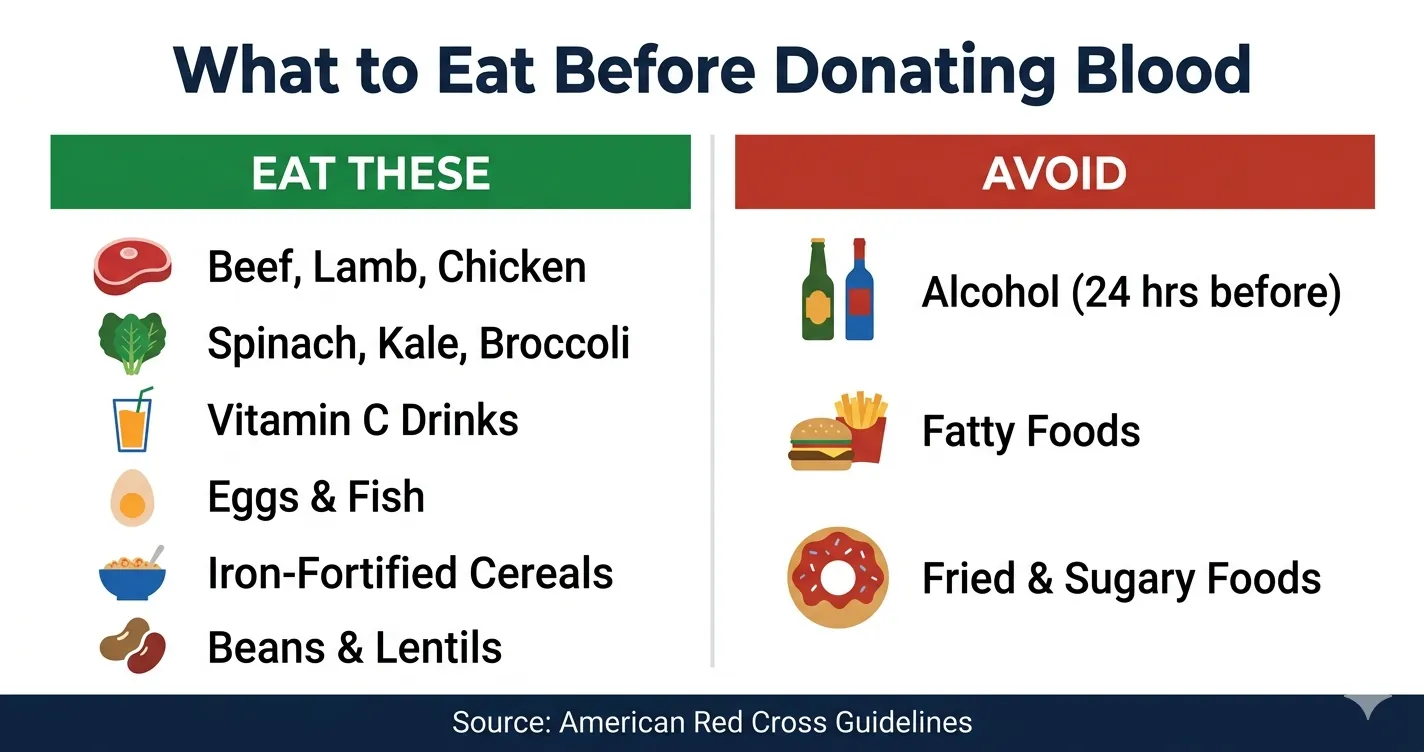
The short answer: a real meal with iron, protein, and plenty of water — eaten within a few hours of your appointment. What you skip matters as much as what you eat. Fatty foods, alcohol, and showing up hungry are the most common reasons people feel faint or get turned away on donation day.
Getting ready for donation day?
A meal with iron, protein, and extra water does the work. Some donors also keep a few basics on hand:
Not medical advice; check with the blood center or your doctor about supplements. As an Amazon Associate, LargestCharities earns from qualifying purchases.
About half of the blood you donate is water. Another critical component is hemoglobin — the iron-containing protein that carries oxygen. The Red Cross checks your hemoglobin level before every donation. If it's too low, you'll be turned away that day. Eating well in the days before your appointment, especially iron-rich foods, is what keeps that number in range.
There's also the practical issue of blood sugar. Donation takes roughly 30 minutes, and your body is doing real work. If you skip a meal beforehand, your blood sugar starts low and can drop further during or after the draw, which is when people feel dizzy or faint. It happens more often than it should, and it's almost entirely preventable.
Iron is what your body uses to make hemoglobin. Building your iron stores over a few days works better than cramming red meat the morning of donation. The two types:
| Heme Iron (animal sources — easier to absorb) | Non-Heme Iron (plant sources) |
|---|---|
| Beef, lamb, pork, veal | Iron-fortified breakfast cereals |
| Chicken, turkey (especially dark meat) | Beans, lentils, tofu, peanuts |
| Fish: tuna, shrimp, clams, mackerel | Spinach, kale, beet greens, chard |
| Liver | Whole wheat bread, enriched pasta, oats |
| Eggs | Dried fruit: raisins, apricots, prunes |
Vitamin C significantly improves how well your body absorbs non-heme iron from plant sources. A glass of orange juice with your oatmeal, or strawberries alongside your eggs, makes a real difference. Sources of vitamin C: oranges, orange juice, bell peppers, tomatoes, kiwi, strawberries.
Whole grains, sweet potatoes, oatmeal, and quinoa digest slowly and help maintain stable blood sugar through the donation. These are what keep you from bottoming out 20 minutes into the draw.
Protein supports tissue repair after donation. Eggs, lean meats, Greek yogurt, cottage cheese, and nut butters all work. A turkey sandwich on whole wheat a couple of hours before your appointment is a reasonable pre-donation meal.
Alcohol — avoid for 24 hours. Alcohol dehydrates you, which makes donation harder on your body and slows recovery afterward. It also affects blood pressure and circulation.
Aspirin — avoid for 48 hours if donating platelets. This applies specifically to platelet donations, not whole blood. Aspirin affects platelet function, and platelets collected within 48 hours of aspirin use can't be used. Regular ibuprofen is fine for whole blood donation.
Coffee and caffeine. Some blood centers recommend limiting caffeine before donation because it can constrict blood vessels and affect iron absorption. It's not universally prohibited, but if you're a heavy coffee drinker, cutting back the morning of won't hurt.
The American Red Cross recommends drinking an extra 16 oz (2 cups) of water before your appointment — on top of the 9–13 cups you should normally drink throughout the day. Hydration is the single most effective thing you can do to make the donation process faster and more comfortable. Well-hydrated veins are easier to access, blood flows more readily, and you're less likely to feel faint afterward.
The donation center will give you a snack and something to drink afterward — eat and drink it, even if you feel fine. Your body just gave up roughly a pint of blood. Drink an extra 4 cups (32 oz) of fluids over the next 24 hours. Avoid vigorous exercise and heavy lifting for the rest of the day. Your body will replenish the lost fluids within a few days; red blood cells take about two weeks to fully replace.
If you donate frequently, the Red Cross recommends taking a multivitamin with iron — especially if you're a younger donor — to replenish iron stores between donations. Every-other-day dosing of iron supplements is generally better tolerated than daily dosing.
More Blood & Plasma Donation Guides
Sources: American Red Cross blood donation guidelines (redcrossblood.org); Red Cross iron information page; GoodRx Health (updated Feb 2026); Healthline; CSL Plasma nutrition guidelines. This page is for informational purposes only and does not substitute for medical advice. Contact your donation center if you have specific health questions about eligibility.