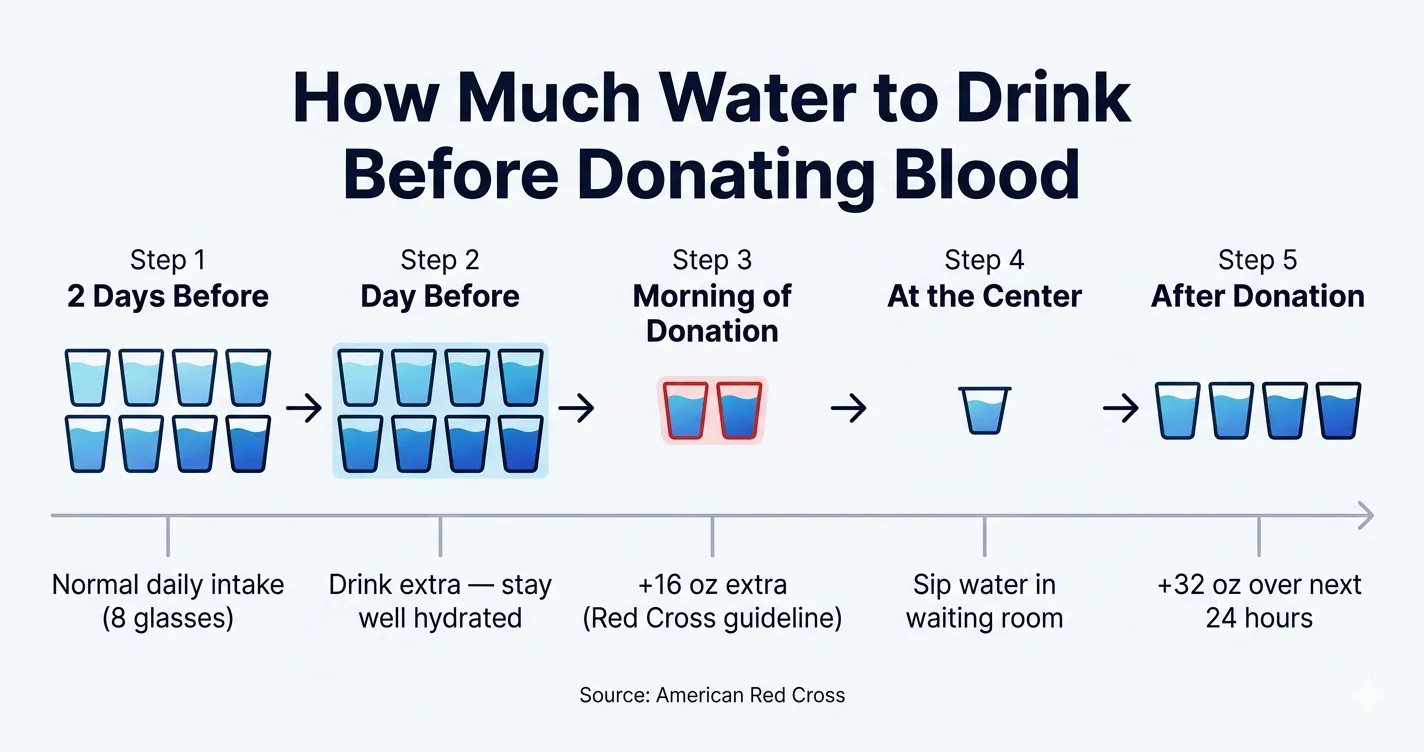
The American Red Cross recommends drinking an extra 16 oz (2 cups) of water before your donation appointment, beyond your normal daily intake. That's the official number. The practical reality is that most people who feel faint after donating were already mildly dehydrated going in — so starting to hydrate the evening before, not just the morning of, is how you actually get ahead of it.
About half of your blood — the whole blood you're donating — is water. More specifically, it's plasma, which is roughly 90% water. When you're well-hydrated, your veins are visibly fuller and easier to access, blood flows more freely through the collection tubing, and your body handles the loss of a pint of fluid with less disruption to blood pressure.
When you're dehydrated, the opposite happens. Blood becomes more viscous and moves slowly. Veins are harder to find and access, sometimes requiring multiple needle attempts. Blood pressure is already lower than your normal baseline, and removing a pint of blood drops it further. This is the mechanism behind most blood donation side effects: dizziness, lightheadedness, and fainting are largely the symptoms of a blood pressure drop in someone who was already running low on fluids.
The common mistake is treating the 16 oz recommendation as something to do right before walking into the donation center. Drinking a large amount of water in one sitting fifteen minutes before donation is not the same as being well-hydrated. Your body needs time to absorb fluid and distribute it into your bloodstream and tissues.
A better approach: drink more water throughout the day before your appointment. If your donation is in the morning, drink extra water the evening before and continue the morning of. If your donation is in the afternoon, you have more time to spread it out. The goal is arriving at the donation center already hydrated — not trying to catch up in the parking lot.
Water is the best choice because it hydrates without adding variables. Other acceptable fluids before donation include: fruit juice (orange juice is particularly useful because vitamin C improves iron absorption), herbal tea, sports drinks, and other non-alcoholic beverages. Avoid alcohol for 24 hours before donation — it's a diuretic and works directly against what you're trying to accomplish with hydration. Caffeine in moderate amounts is generally fine; just follow it with water.
If your urine is dark yellow or amber, you're dehydrated. Clear to light yellow urine is the target. You want to be in that range by the time you arrive at the donation center. If you're reaching the appointment and your urine is still dark, you haven't had enough time to rehydrate — and you'll likely feel it during or after the draw.
The Red Cross recommends drinking an extra 32 oz (4 cups) of fluids in the 24 hours after donation. Your body will replenish the lost fluid within a few days, but you can speed that process and reduce side effects by actively hydrating after you leave the donation center. The juice or drink they give you immediately after the draw is the beginning of that process — drink it before you stand up.
More Blood & Plasma Donation Guides
Sources: American Red Cross blood donation hydration guidelines (redcrossblood.org); Ben's Natural Health; Root'd health blog. For informational purposes only.