✍️ LargestCharities Editorial Team|🩺 Fact-checked against American Red Cross guidelines|🗓 Last updated: May 2026
Deaths directly attributable to the plasma donation process are extremely rare. The question comes up because plasma donation centers are for-profit businesses that operate with less oversight scrutiny than hospitals, and because some donors undergo the process dozens or hundreds of times. The honest answer requires separating what happens during donation from what happens to people who donate over long periods of time.
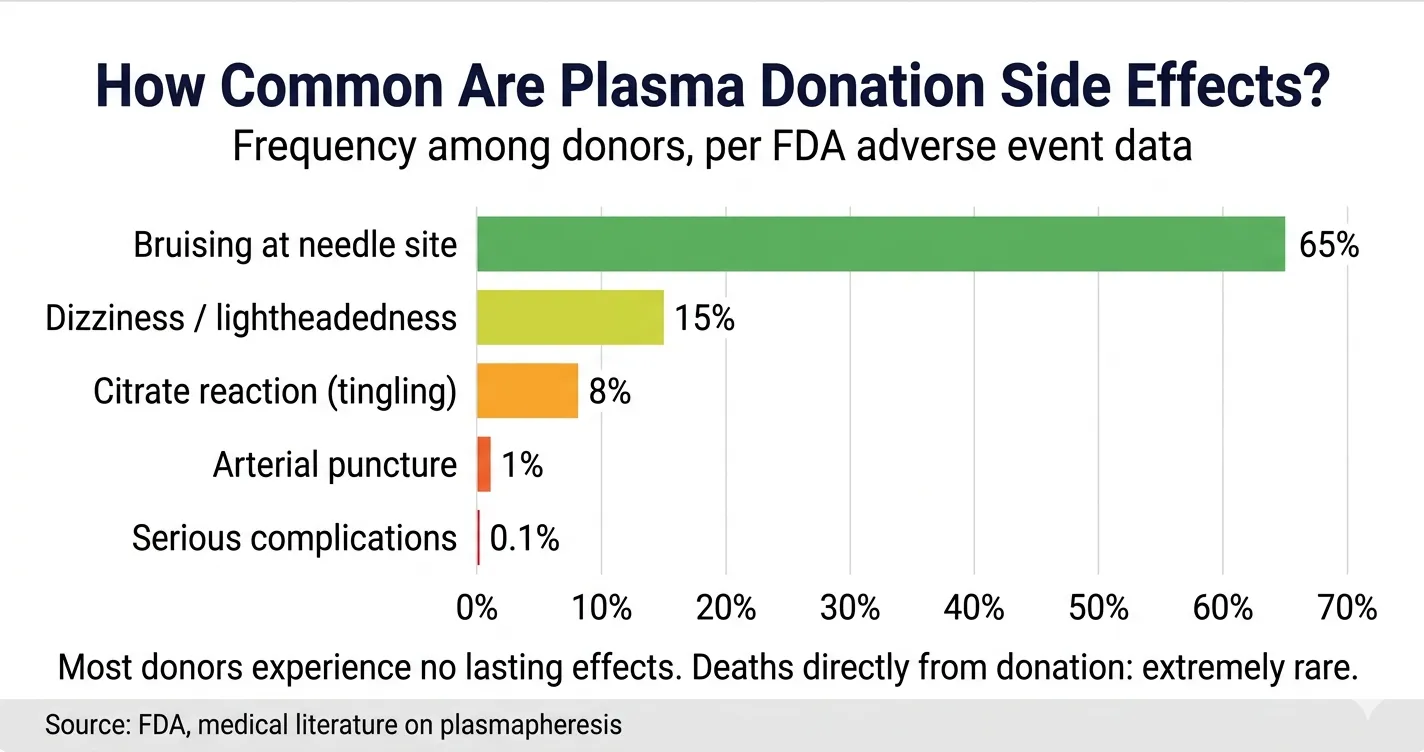
Source: FDA adverse event data, medical literature on plasmapheresis
What the Medical Record Actually Shows
Plasma donation centers are required by the FDA to report adverse events, including any deaths that occur on their premises. Deaths that occur at or near donation centers are investigated. In the cases that have been documented and reported in the medical literature, the deaths are almost universally attributed to pre-existing medical conditions — undetected heart conditions, aneurysms, or other issues that would have caused problems regardless of the donation. The process of plasmapheresis itself has not been documented as a direct cause of death in otherwise healthy donors in the medical literature.
This is a meaningful distinction. Someone having a cardiac event at a donation center while donating plasma is not the same as someone dying because they donated plasma. The former has occurred. The latter — plasma donation causing the death of a healthy person — is not documented in the peer-reviewed literature.
How Plasma Donation Differs from Whole Blood Donation
One reason plasma donation is generally considered safe is that it uses a process called plasmapheresis. Your blood is drawn, the plasma is separated by a centrifuge machine, and your red blood cells and other components are returned to your body mixed with sterile saline. You don't lose a pint of blood — you lose plasma, which your body replenishes within 24–48 hours.
This means the volume-related risks that exist with whole blood donation (significant blood pressure drop, anemia, fatigue) are less acute with plasma donation. The trade-off is that plasma contains proteins, including immunoglobulins, that take longer to replenish and can accumulate as a deficit in very frequent long-term donors.
Actual Risks of Plasma Donation
Common and Minor
Bruising at the needle site. The most frequent side effect. Resolves within a week.
Dizziness or lightheadedness. More common in first-time donors, dehydrated donors, or those who haven't eaten. Manageable by hydrating and eating beforehand.
Fatigue after donation. Mild fatigue for several hours is normal. Severe or persistent fatigue is worth reporting to the center.
Citrate reaction. Citrate is added to drawn blood to prevent clotting before the plasma is separated and returned. Some donors experience tingling or numbness around the mouth, face, hands, or feet as a result. This is harmless and resolves quickly. Calcium supplements can help prevent it.
Uncommon but More Serious
Arterial puncture. If a needle accidentally enters an artery rather than a vein, blood will flow faster and appear brighter red than usual. Staff should recognize this immediately. Arterial punctures require prompt treatment but are manageable when caught quickly.
Nerve injury. Poor needle placement can affect nearby nerves, causing pain, numbness, or tingling in the arm or hand that persists after donation. Uncommon, but worth reporting if it happens.
Infection at the needle site. Very rare with proper technique and sterile equipment.
Long-Term Frequent Donation — What Research Shows
The concern about frequent plasma donation isn't death — it's protein depletion. Studies have found that donors who give plasma very frequently over extended periods may experience reduced levels of immunoglobulins (antibodies that help fight infection). The US allows plasma donation up to twice per week. European countries, which use plasma from fewer paid donors, have more conservative limits.
A 2023 review published in medical literature noted that American plasma donors give significantly more plasma annually than European donors. Some researchers have raised concerns about the long-term immune consequences for very frequent donors — particularly those who donate twice weekly for years. This research is ongoing and not conclusive, but it's the most serious legitimate concern raised about plasma donation safety beyond the immediate session risks.
FDA Regulation and Oversight
Commercial plasma centers are licensed and regulated by the FDA under 21 CFR Part 640 and related regulations. Centers must maintain donor records, conduct pre-donation screenings, use sterile disposable equipment, and report adverse events. Inspection and enforcement varies, and critics of the industry argue that oversight is insufficient given the volume of donors and the profit motive. But the basic regulatory framework exists and functions.
If you donate plasma regularly and have concerns about your long-term health, ask your primary care physician to monitor your protein levels (total protein and immunoglobulins). This is a simple blood test that can identify depletion before it becomes symptomatic.
Frequently Asked Questions
Is it safe to donate plasma twice a week?
Within FDA guidelines, twice-weekly donation is considered safe for healthy adults in the short to medium term. Long-term research on very frequent donors raises some questions about protein and immunoglobulin levels over years of consistent donation. If you donate frequently, staying well-hydrated and eating enough protein is important, and periodic medical checkups are worth doing.
What is a citrate reaction during plasma donation?
Citrate is added to your blood during plasmapheresis to prevent clotting before plasma is separated and returned. Some donors experience tingling or numbness around the mouth, cheeks, fingertips, or hands as the returned blood carries citrate back into circulation. It's harmless and resolves within minutes. Slowing the return rate, taking calcium supplements before donation, or eating calcium-rich foods beforehand can reduce the likelihood.
Can you donate plasma if you have a health condition?
Eligibility depends on the specific condition. Pre-donation screening is intended to catch conditions that would make donation unsafe for the donor or the recipient. Conditions that disqualify donors include HIV, hepatitis B or C, certain cancers, and some medications. Many chronic conditions (well-controlled diabetes, hypertension, etc.) do not disqualify you. Always disclose your health history and current medications accurately during screening.
Sources: FDA plasma donation regulations (21 CFR Part 640); StatPearls blood donation article; medical literature on plasmapheresis adverse events. This page is for informational purposes only and does not constitute medical advice.