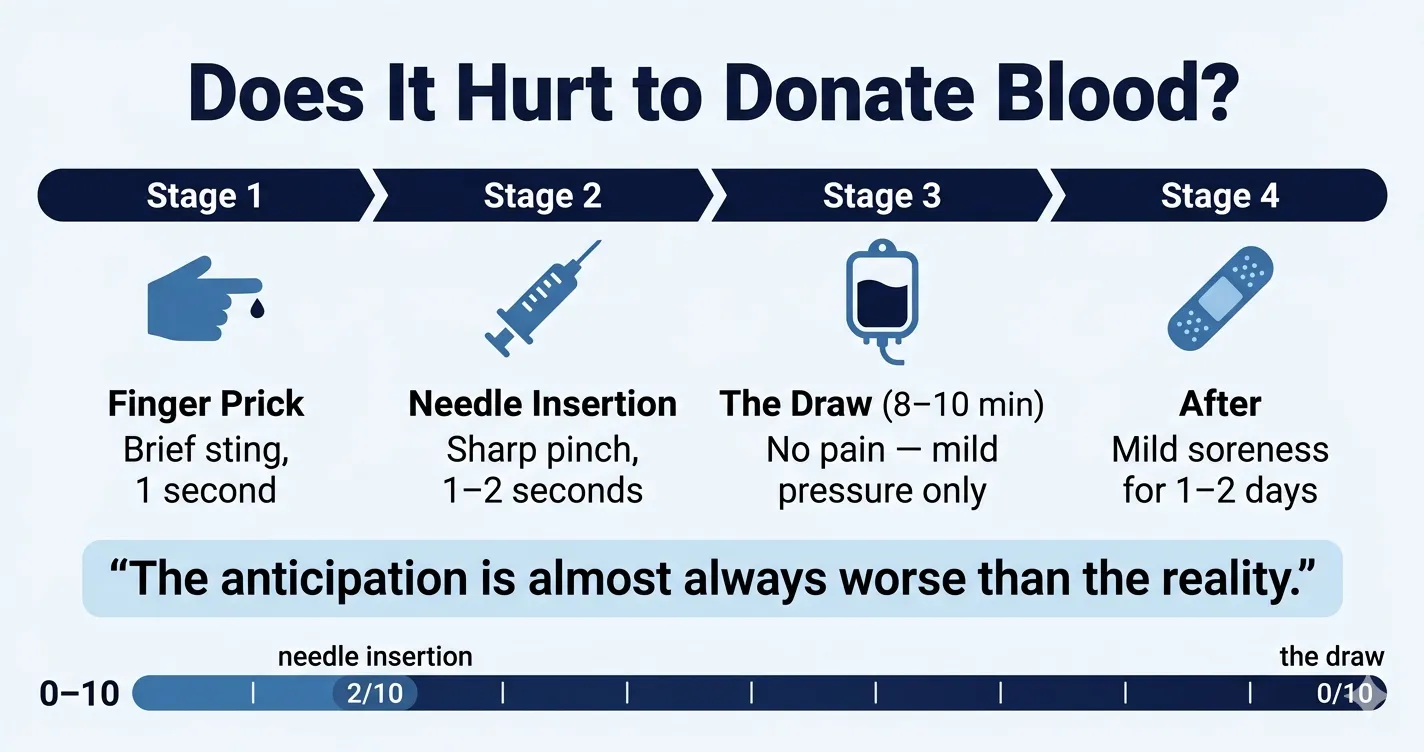
Brief answer: the needle stick is a sharp pinch that lasts one to two seconds. The draw itself is painless for most people. The apprehension beforehand is almost always worse than the reality. If you've ever had blood drawn for a routine blood test, donating blood is a comparable experience — just slightly longer in the chair.
The needle used for whole blood donation is larger than a routine blood draw needle. It's a 16-gauge needle, which sounds alarming if you know needle gauges but is simply what's required to collect a pint of blood in a reasonable time frame. This does mean the initial stick is slightly more noticeable than a typical lab draw.
Most donors describe it as a sharp pinch — similar to having your finger pricked, but in the inner arm at the elbow. It's over in one to two seconds. After the needle is in place, the vast majority of donors feel no ongoing pain from it. The needle is stable, the blood flows out through the tube, and there's nothing to feel but mild pressure.
For a small percentage of donors, the vein is harder to access or the needle needs to be adjusted slightly — that can feel more uncomfortable. If you have notoriously difficult veins, mention this to the phlebotomist so they can take extra care with placement.
The most common unpleasant experience at a blood donation center isn't pain — it's dizziness or fainting. And it's almost never caused by the needle hurting. The two main causes are:
Vasovagal response. The nervous system's reaction to the sight of blood, needles, or the anticipation of pain can trigger a sudden drop in heart rate and blood pressure. This is involuntary and doesn't mean you're weak or anxious — it happens to plenty of experienced donors. Signs: feeling warm, sweaty, lightheaded, or a sudden visual change. Tell staff immediately if you feel any of these. They recline the chair, elevate your legs, and the episode passes.
Dehydration and low blood sugar. If you skipped a meal or didn't drink enough water, your baseline blood pressure is lower than usual. Losing a pint of blood drops it further. This is why eating beforehand and drinking extra water aren't optional suggestions — they're the primary prevention for feeling awful after donation.
The needle site will typically be tender for a day or two after donation — similar to how a bruise feels when you press it. Some donors get a mild bruise at the puncture site, especially if the phlebotomist had to adjust the needle. This is normal and fades within a week. Apply a cold pack if the bruise bothers you.
If the bleeding at the needle site doesn't stop with normal pressure, or if you develop significant swelling, numbness, or tingling in the arm, contact the donation center. These are uncommon but worth a call.
Yes. A fresh, sterile needle is used for every single donor — there is no disease transmission risk from the act of donating. The Red Cross and all licensed donation centers use disposable equipment. The screening process before donation also protects donors: they check your blood pressure, heart rate, hemoglobin, and ask about medications and recent illnesses before anyone gets near you with a needle.
The risks of blood donation are minor and mostly limited to: bruising at the needle site, temporary lightheadedness, and very rarely, fainting or fatigue that lasts a few hours. Serious complications are extremely rare.
More Blood & Plasma Donation Guides
Sources: American Red Cross blood donation process overview; University Health; Healthline. For informational purposes only — not medical advice.